JS Business Solutions Blog
JS Business Solutions has been serving the Attleboro area since 2012, providing IT Support such as technical helpdesk support, computer support, and consulting to small and medium-sized businesses.

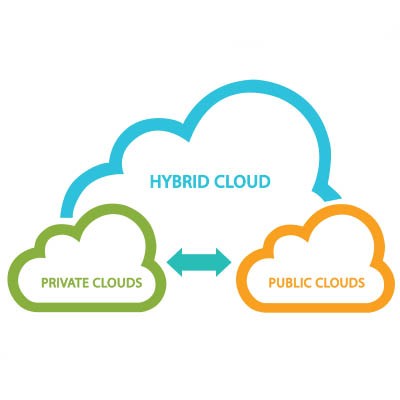
If you want to discuss the single most influential technology for the modern era, there’s a lot of competition—but the cloud is a serious contender. Through the cloud, your organization can pull off feats previously impossible for all but the largest and most profitable companies. Today, we want to look at how small businesses use the cloud and how you benefit from the various models.
0 Comments

AI is everywhere and it could be said that it is transforming the modern economy. With each passing day the technology is becoming an essential tool for businesses looking to boost their overall business efficiency. Small businesses can use AI in a number of ways and in today’s blog, we’ll explore how they can use AI to their advantage.

Technology has enabled us to achieve more than ever before, but with that progress comes higher expectations. Increased productivity demands can sometimes feel overwhelming, making it essential to find effective ways to manage tasks. There's a natural limit to how much we can do, however, and certain obstacles can push us to that limit more quickly. Today, we’ll explore two common productivity pitfalls that many face.
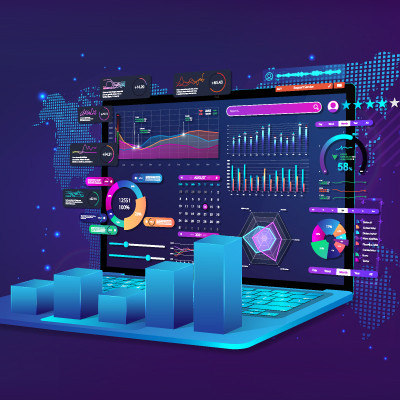
Decision-making is such a big part of business, and a lot of time the “gut feeling” may actually work against their stated aims. By incorporating back-end analysis into their strategy, business owners can get insights that they typically wouldn’t even consider. It can make their businesses more money through improved sales, customer relationships, and efficiency. In today’s blog, we will go through what the incorporation of AI means for businesses regarding their business intelligence.

Cybersecurity is necessary for businesses to function, but when it turns to overreaching and overinvestment—a concept called cybersecurity sprawl—it becomes a problem. Today, we want to highlight some of the many challenges that can come about from cybersecurity sprawl, as well as how you can avoid it.

Digital waste encompasses all the unnecessary data cluttering our storage systems until we decide to address it. This includes redundant files, outdated emails and chats, and forgotten photos gathering digital dust. While dismissing digital waste as a mere inconvenience is tempting, its implications are unfortunately significant.

The definition of sustainability, according to the United Nations, is “meeting the needs of the present without compromising the ability of future generations to meet their own needs.” Originally coined in 1987, this definition has fueled businesses' efforts to work toward their own versions of sustainability, as per their service models. Let’s look at some ways you can make your own operations more sustainable.
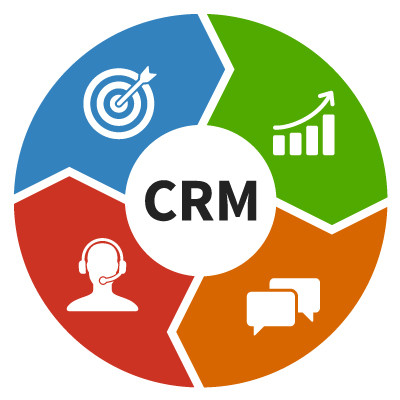
Your customers—both those you currently work with and those you have yet to onboard—are the key to unlocking your company’s potential. Therefore, it stands to reason that you’ll want a solution in place to help you manage the interactions you have with potential customers. This is what a customer relationship management tool, or CRM, is all about. With the right CRM, you can fully leverage your organization’s customer base to maximize profits and attract new leads.

Are you finding that some of your younger hires aren’t sticking around nearly as long as you’d prefer them to? There’s a good chance that these employees are experiencing a relatively recent phenomenon called “shift shock,” the latest workplace trend focusing on employee engagement and satisfaction. Let’s examine shift shock and how to avoid its impacts in your business.

With technology playing an important part in just about all businesses, it can be quite expensive to get the tools you need to succeed. Today, we want to recommend specific strategies you can use to alleviate the frustrations of working within the constraints of a limited IT budget.

Of all the aspects that play a part in your business’ success, its company culture can often be overlooked as nothing more than a perk… something nice to offer the team, but ultimately unimportant. This is very much a misconception.
Let’s discuss how valuable a positive company culture is, and how to develop one in your business. Don’t worry, we’ll get into the technology of it all, too.
The idea of “finding time” for particular tasks has always been a bit of an odd saying. After all, there is a finite amount of time in any given day. No matter how hard you search, you’re not going to magically find more of it. What you can do for those tough-to-schedule projects and tasks, however, is make more time by freeing up time that is already in use.
Let’s go over some strategies you can use to make more time for the projects that matter most, whether they are for business or for life.

Your network is your business’ nervous system, enabling all of your operations. At least, that’s what it’s supposed to do. Unfortunately, network bottlenecks—the lack of available bandwidth limiting the capacity for data to move about—can put a stop to this. Let’s talk about a few ways to avoid such a bottleneck.

A point of sale system is incredibly valuable to have for any retail or hospitality business venture, and the right solution can give you a dynamic range of features and services that can drive business growth and the customer experience. Today, we want to look at some of the greatest benefits to implementing a powerful POS system.

Businesses have been utilizing flexible working conditions in increasing droves, due in no small part to the pandemic, but many continue to hold onto these policies in at least some capacity. Businesses, therefore, need to be very cognizant of data retrieval policies and security measures that can keep their organization safe.

People are constantly upgrading their technology. I mean, just take a look at how many people upgrade their phone every year even though innovation of the devices has slowed considerably. Alternatively, sometimes users ignore the signs that it is time for an upgrade even when they are crystal clear. This type of mentality will not help you, especially if your technology breaks down. You need to be able to identify when older devices are holding you back and take steps toward replacing them with better, more powerful ones.

Projects are a big part of doing business. When we mention projects it’s typically in reference to IT projects, but for your average business, when they think of projects it means specific jobs coordinated for specific clients. In this environment it is essential to get the people on a project team on the same page and working towards a shared end. In this week's blog, we thought we’d discuss the importance of solid project management and how certain technologies can help project managers improve their turnaround times.

If we asked you to identify the one hour of your day when you get the most done, would you be able to tell us? Even more interestingly, do you know how to get the most out of your so-called “power hour?” Let’s take a look at some of the theories about how you can make the most out of your most productive time in the workplace.

There are many proponents of the four-day workweek, so many to the point where it is actively being implemented to determine if it is as successful of a strategy as it is in theory. You might be surprised to hear that it is, in fact, a successful business model, and there are studies to back it up.

The cloud can be a wonderful asset for a business that utilizes it well—particularly if the business can move much of its IT workload to the provider. For organizations that are considering migration to the cloud, we have some helpful tips and tricks to make the process easier than ever.