JS Business Solutions Blog
JS Business Solutions has been serving the Attleboro area since 2012, providing IT Support such as technical helpdesk support, computer support, and consulting to small and medium-sized businesses.


The demand for digital storage has skyrocketed over time. While hard disk drives (HDDs) once dominated the market, solid-state drives (SSDs) are now becoming more popular thanks to their speed, durability, and increasing affordability.
That said, HDDs are still in wide use, though they are far more susceptible to failure compared to SSDs. So, how can you spot the signs that your hard drive might be on the verge of failing?
0 Comments

Technology has enabled us to achieve more than ever before, but with that progress comes higher expectations. Increased productivity demands can sometimes feel overwhelming, making it essential to find effective ways to manage tasks. There's a natural limit to how much we can do, however, and certain obstacles can push us to that limit more quickly. Today, we’ll explore two common productivity pitfalls that many face.
Without technology, your business cannot run the way it needs to. If a disaster strikes, there is no telling how much it could affect operations. For example, a hurricane or a cyberattack could disrupt operations to the point where your business cannot function the way it needs to. Today, we want to highlight some of the ways that a disaster recovery system can help you overcome these hurdles.

Data backup is a crucial part of any business operation, but many employees within an organization might not necessarily know or understand how data backup actually works, or even what gets backed up during the process. Today, we want to demystify how data backup typically works and why it’s important to know what gets backed up, and when.

You’ve likely seen many blogs on our feed about data backup and disaster recovery, and that is because it’s an incredibly important solution for businesses of all kinds. Today, we want to look at the 3-2-1 rule and how it can help your business preserve its important assets in the event of a disaster.

As business computing goes, ransomware poses the most significant threat. That’s why it’s imperative for organizations to proactively address this menace head-on. Today, we propose a comprehensive three-part strategy that can help your organization sidestep ransomware.
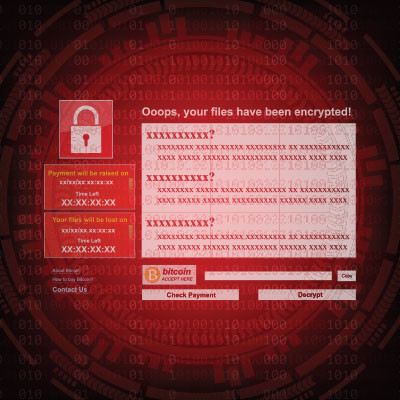
Ransomware is a real problem; I mean, a real problem. Not only does it create serious problems for any organization that is victimized by it, it is about to be a completely pervasive problem for everyone. It is extremely important for your organization to take the threat of ransomware seriously by implementing a strategy to keep it from being an issue. Today, we offer a three-pronged approach to doing just that.

Digital storage has been evolving with the development of reliable and long-lasting devices with extremely fast storage and massive storage capacity. The innovation of the solid state drive (SSD) has changed the outlook of storage somewhat, but large-capacity SSDs can be expensive. The hard disk drive (HDD) is still a cost-effective alternative, but it is a mechanical device, which, over time, will be prone to failure.

When a disaster strikes your business and your important data is compromised, can your business recover? Can it recover quick enough for it to not be irreparably damaged? Could you even conduct business without the lost data? How much downtime can your business even take?

No matter where your business calls home, it will be vulnerable to some sort of disaster, whether it’s a natural disaster that wipes your office off the map or a cyberattack that cripples your data infrastructure. You don’t have to resign yourself to this fate, though; with the appropriate tools, your business can survive just about anything and keep operations going even under the worst circumstances.
World Backup Day is March 31st, each and every year. However, while there is value to having a dedicated holiday to raise awareness of the need for backup, it should not be the only time it is considered. Let’s go over the importance of proper backup practices, just in time for the holiday, so that you can establish the backup that your business needs if it's not already in place.

A good data backup protects your business’ information (and because of this, the business itself) from a wide variety of threats. Of course, to accomplish this effectively, a data backup needs to itself be secure and reliable. Let’s take a few moments and go over a few practices and policies you would likely find it beneficial to adopt.

When you have a thorough and powerful data backup strategy in place at your business, you are protecting your operations, your employees, and your customers from an array of terrible scenarios. Unfortunately, many businesses don’t think of data loss in the terms it should be considered in, a complete travesty. Today, we thought we would briefly describe the long and short of data backup and recovery practices that can put your business in a position to secure and restore your data should it be corrupted, destroyed, or stolen.

A business’ data needs to be considered a priority, which means that its protection should be prioritized accordingly. One facet of doing so is maintaining a backup with a strategy in compliance to best practices. To accomplish this, your backup should feature something that isn’t often considered a benefit: redundancy.

Part of being a successful entrepreneur is having a positive mental attitude. After all, pessimists wouldn’t make it far. Stats, however, tell a story regardless of a business owner’s perception. Statistically, most businesses will have to deal with some sort of “disaster”. That is: a situation where your business will be very much at risk. For this reason, we recommend BDR.

Tomorrow is World Backup Day, which--considering the current business climate as the coronavirus pandemic rages on--seems only too appropriate. Let’s discuss why times like these make it only too clear how critical a business continuity strategy is, especially when supported by the right backup solution.

Data recovery is more a strategy than a solution. You first need to keep a regular backup to ensure that you aren’t losing large chunks of productivity. Then, you need to have a strategy to efficiently recover data if it is corrupted, lost, or stolen. Today, we’ll talk a little bit about some situations that businesses run into that would spark data recovery.
If you are a regular reader of this blog, or if you’ve seen our blogs on social media, you’ve probably seen that we discuss data backup regularly. Some of you have a dedicated data backup platform that routinely works to keep your business safe from data loss. Some of you don’t, and need one. Today, we’ll talk a little bit about why it’s such a big deal.

Your business’ data is a key component to its success, and with a managed service provider on your side, it becomes even more beneficial for you to put to use. As we carry on with our series describing the value of a relationship with a managed service provider, we’ll look at a few ways that your business can benefit from the data services that this relationship can provide.

A backup is a critical consideration for any business, in more ways than one. We have a tendency to immediately jump to “business-ending disaster” whenever we mention a backup. However, we’ve realized that this may have the unfortunate side effect of lulling you into a false sense of complacency - after all, what are the chances of being struck by a “business-ending disaster?”