JS Business Solutions Blog
JS Business Solutions has been serving the Attleboro area since 2012, providing IT Support such as technical helpdesk support, computer support, and consulting to small and medium-sized businesses.


Business is built on relationships, and to be frank, some can be quite challenging. Think about all the difficulties you’ve faced with customers, vendors, or employees. Sometimes, it's hard to imagine how your business could succeed without these key players, but they all can be a drain on any given day. Today, we’ll explore how the relationships you build in business can be the deciding factor in your success.
0 Comments

Today’s businesses need to have access to IT expertise. It is not a stretch to say this in our highly tech-reliant modern society, as business technology has become a legitimate advantage for organizations of any size to utilize against their competition. However, how confidently do you know what to look for in a job candidate?
Let’s go over the expertise—in both hard and soft skills—that you want any IT professional you depend on to have.

The idea of a four-day workweek—where the common 40-hour week is shortened to 32 with no reduction of benefits or take-home pay—is becoming increasingly popular, boasting improved efficiency and heightened levels of employee satisfaction.
Naturally, as an IT provider, we’re intrigued by the idea of using technology to get the most out of this abbreviated time in the office.

It's remarkable, but if you were to assess the greatest threats to your business, your users would likely rank high on that list. Human error poses a significant challenge to your security because cybercriminals exploit your employees' fallibility and proneness to mistakes.

Oftentimes, a technology issue has less to do with the technology itself and more with the one using it. User error is simply one of the biggest reasons why technology support is asked for, and it’s such a common occurrence that it leads to many users becoming the butt of jokes among IT workers. People who provide IT support must practice empathy and understanding rather than foster this antagonistic mindset amongst teams.

With Cybersecurity Awareness Month just around the corner, now seems to be the appropriate time to consider your own business’ cybersecurity. While there are many, many factors that contribute to how protected your business is against threats, one of the most impactful and insidious is how receptive your employees are (or aren’t) to security-centric behaviors.

As comfy as it can be at times, sitting for all hours of the day isn’t something we’re built for. As a result, not only does sitting all day impact our overall health, it can functionally hurt our productivity as well. Fortunately, there are some simple exercises and activities that can be done at the workstation to help mitigate these negative outcomes.

It’s not uncommon for an employee to hold a second job outside of your office, whether it’s a side gig that they are trying to turn into a passion project or a side hustle just to make ends meet or put away a little extra money every month. Workers holding multiple jobs is certainly not unheard of—if anything it’s more common than ever, thanks to the remote work surge. How does this phenomenon impact your organization?

Both in-house and remote operations have their places in the work environment, and many companies have opted to combine the two to create a hybrid workplace. While this too has made a world of difference for all kinds of businesses, others have found that it lacks the inclusivity that a modern workplace demands. Let’s take a look at the cause of this.

We’d be the first to admit that, as much as we’d recommend that you use multi-factor authentication wherever it is available, MFA isn’t perfect. This makes the idea that an improvement to these methods is on the horizon an intriguing one. Let’s discuss what may become the new and improved standard fairly soon.

Burnout is a very real thing, and it can lead to your employees becoming disengaged in their work in more ways than one. Their performance can suffer, but so too can their adherence to your workplace policies—policies like cybersecurity. Let’s take a look at the idea of cybersecurity burnout at all levels, whether it’s for your average employee or your IT workers.

We often discuss how we can help you make your business processes more efficient, but we want to refocus on how you can implement these solutions through the use of digital technologies and transformation. How does new technology affect your staff, and what can you do to ensure that these new tools aren’t impacting your employees in unforeseen ways?

The past few years have seen major shifts in the workforce, and not the kind that employers ever want to see. More people than any other time have willingly left their places of work, with social media hashtags like “#quittingmyjob” and “#quitmyjob” getting hundreds of millions of views. Let’s consider why this is, and what you can do to keep your employees engaged

Privacy for business means a lot more than protecting the data and personal information of clients. It also extends to just about all data collected by a business, including that of the employees. How can you go about protecting this data without also violating the privacy of your employees themselves?

Real cybersecurity preparedness is, like most things in a business, a team effort. Everyone needs to be aware of the best practices involved in cybersecurity. Naturally, this will involve training. In the interest of making sure this training is as effective as it needs to be, we’ve assembled a few best practices to keep in mind as you design a curriculum.

When it comes to your business’ security, your team members can either be your greatest vulnerability or your greatest strength. In order to ensure that the latter is the case, you need to make sure that they are all trained up in the proper security measures. For your convenience, we wanted to share a few tips to help make this training more effective.
When we talk about Internet accessibility (particularly as of late), we mainly focus on the idea of enabling people to use the Internet, regardless of where they may be located. While this is certainly a big issue at the present, there is another kind of accessibility that needs attention: how able those people with disabilities are to use the Internet at all.

Windows is the most used operating system in the world, which should really come as no surprise. After all, it can be found in just about every environment: most businesses utilize it, and there is no shortage of Windows desktops and laptops in homes around the world. While nothing has been set in stone yet, Microsoft may implement a new setting to let all the different uses of Windows shine.

If I were to ask you what you believed was the biggest potential threat to your business’ future, what would your answer be? The correct answer for most is the risk that an employee might let in a threat—intentionally or not. Let’s investigate how this might happen, and what you need to do to stop it.
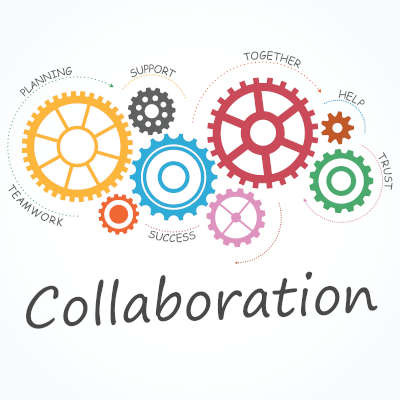
There is no denying that “collaboration” is one of the biggest business buzzwords right now… and for good reason, since it is a prerequisite for any business seeking to compete in its market. Let’s take a different tack than we usually would and consider some of the non-technical elements your business needs to incorporate to encourage collaborative work.